
Your Next Five Moves
In a previous blog post, I shared about building a second brain. You can read more about that here.
In that post, I share how I am journaling my key takeaways from the books I am currently reading. I decided to take another step and create a digital journal to share a summary and key takeaways from each book.
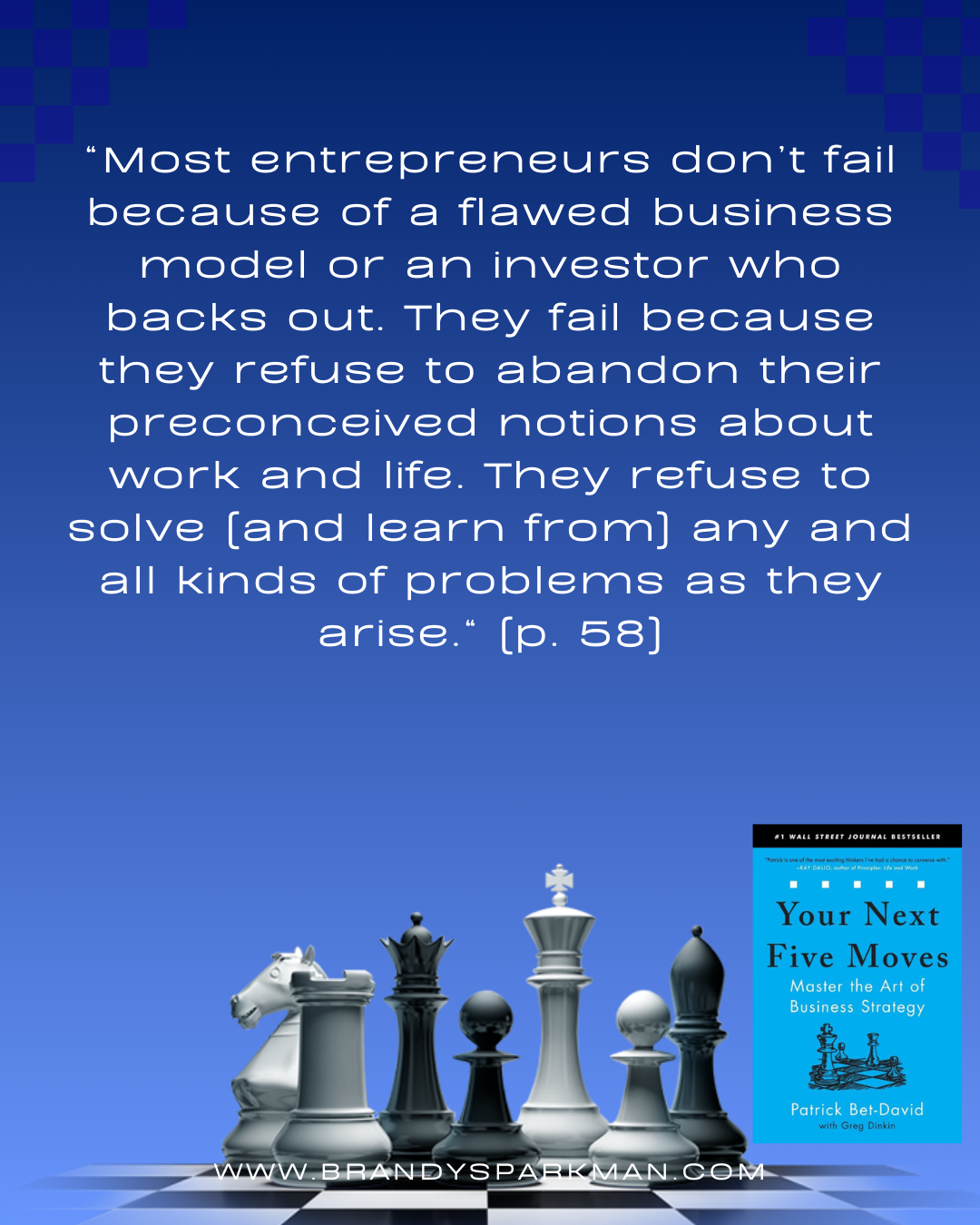
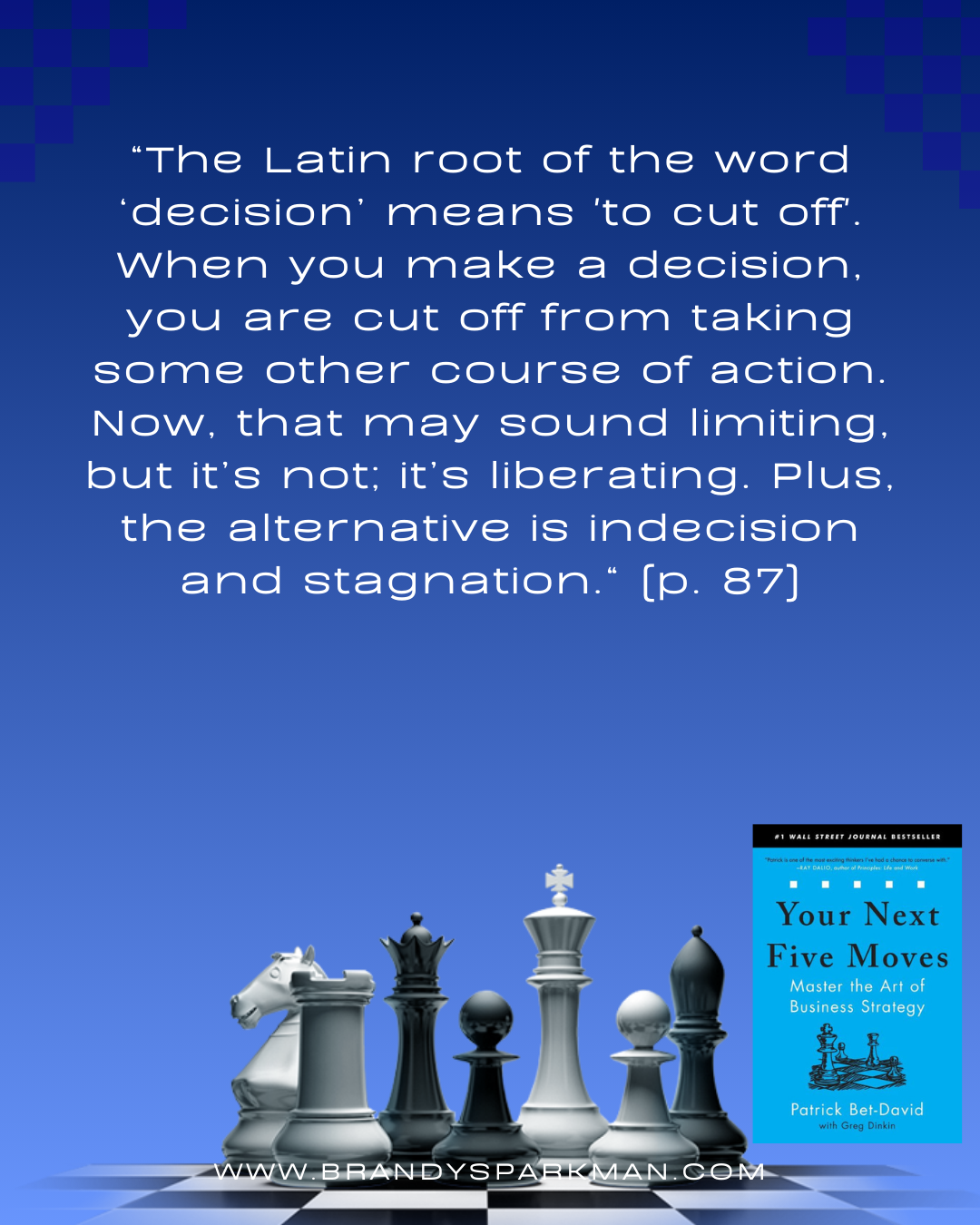
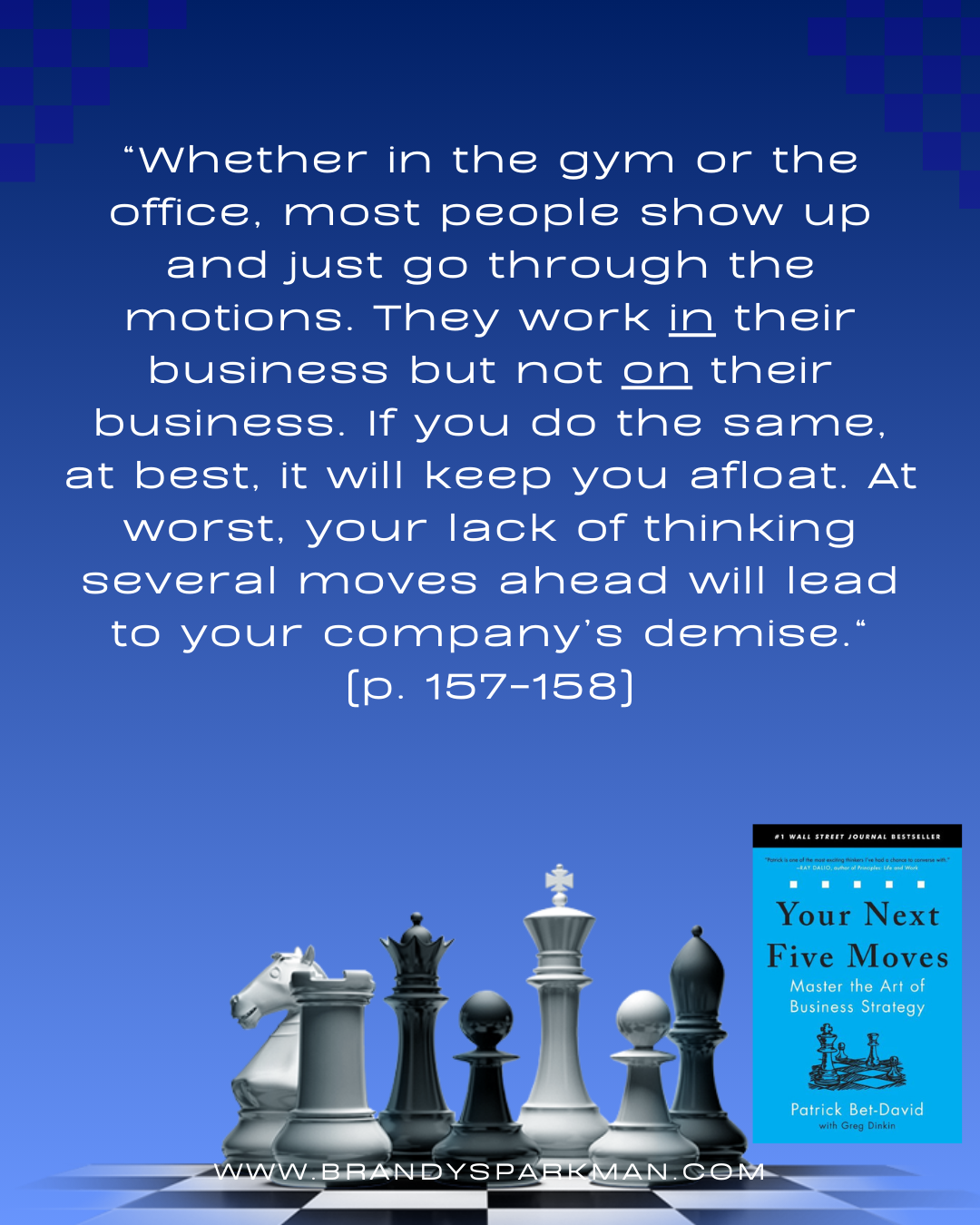
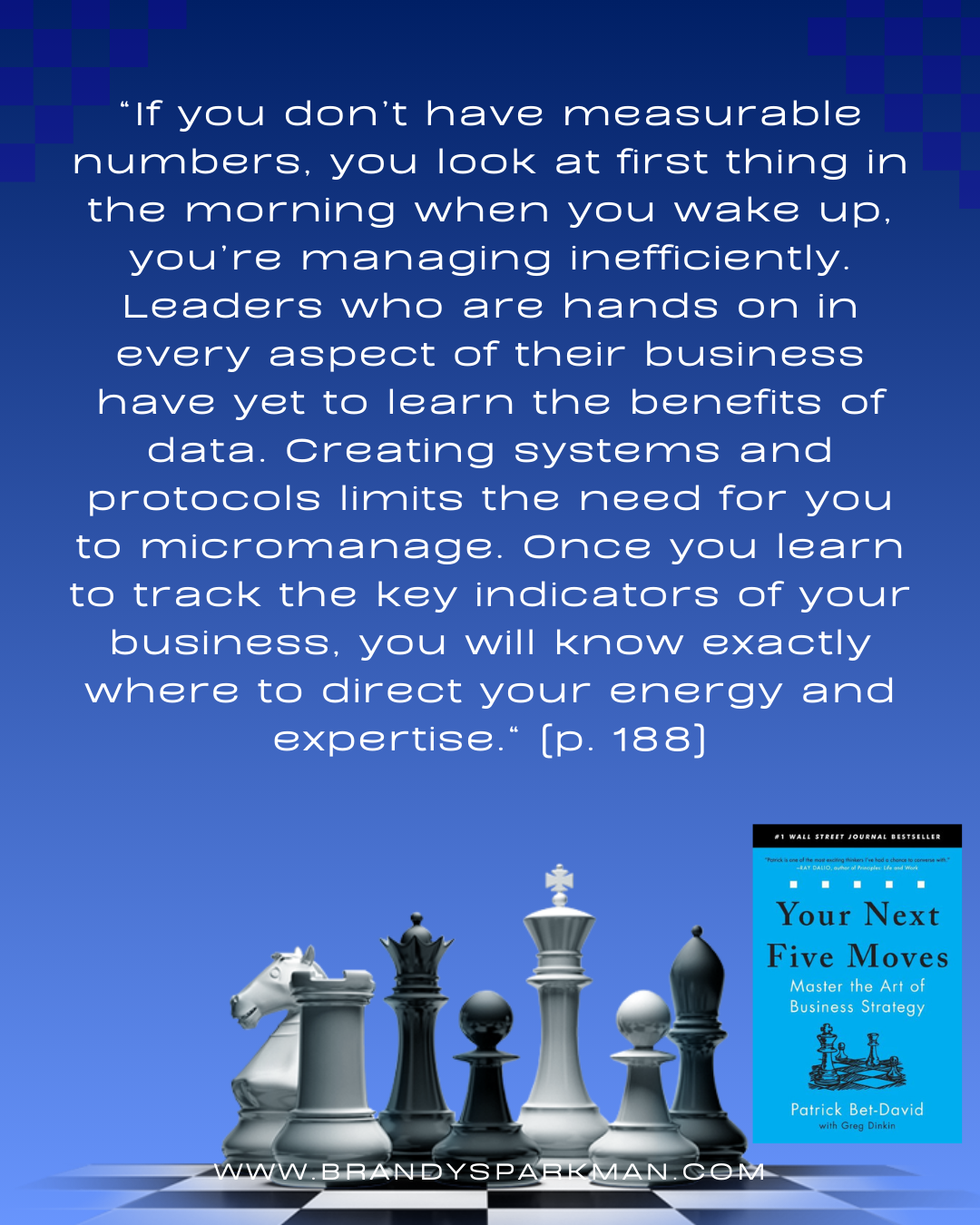
Summary
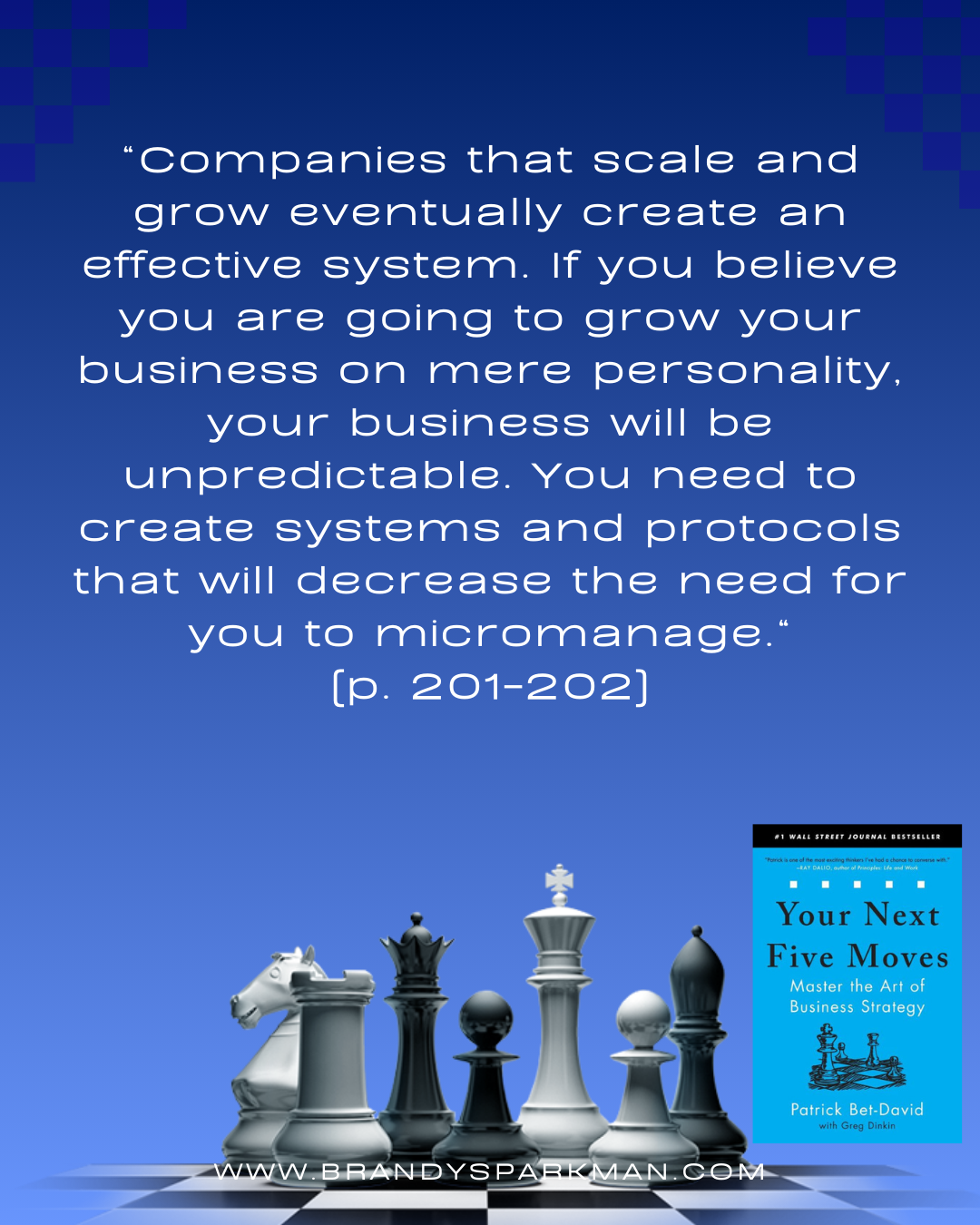
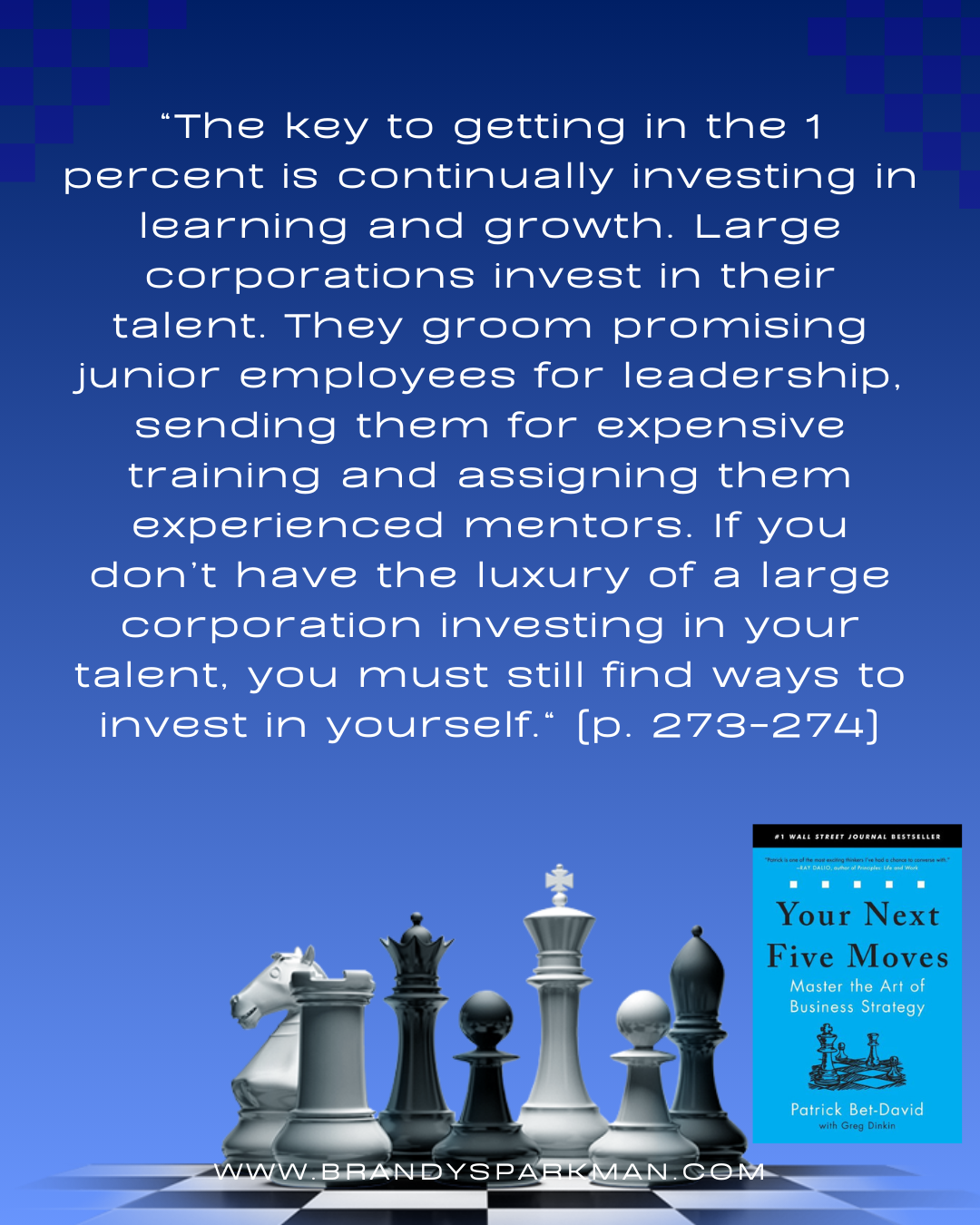
Your Next Five Moves by Patrick Bet-David is a guide to strategic thinking in business and life, centered on the idea that success comes from planning ahead rather than reacting in the moment. Bet-David encourages readers to gain clarity about who they are, where they’re going, and the game they’re playing so they can make intentional decisions that compound over time. By drawing parallels to chess, he shows how understanding your position and thinking several steps ahead creates a strategic advantage.
The book emphasizes five core areas: self-awareness, clear reasoning, team building, strategic foresight, and decisive execution. Bet-David’s message is that high performers don’t rely on luck or speed alone; they operate with confidence, preparation, and a long-term mindset. Instead of making isolated decisions, readers are challenged to align every move with a bigger vision and position themselves to respond thoughtfully, no matter what comes next.
Key Takeaways
Clarity comes before strategy: You can’t make smart moves if you don’t clearly understand who you are, what you want, and the game you are playing. Self-awareness is the foundation of every good decision.
Think in sequences, not single decisions: Every move creates consequences. Strong leaders consider second- and third-order effects instead of focusing only on the immediate outcome.
Stop reacting—start positioning: Reactive decisions keep you stuck. Strategic positioning gives you options, leverage, and control even when circumstances change.
Know your strengths and weaknesses: Success isn’t about doing everything; it’s about leaning into what you do best and building systems or teams to support the rest.
Build the right team early: Growth stalls when the wrong people are in the wrong seats. Strategic leaders intentionally surround themselves with people who complement their skills.
Information without decision-making is useless: Data, insight, and advice only matter if they lead to action. Strategy must always connect to execution.
Confidence is built through preparation: The more prepared you are, the less emotional and reactive your decisions become. Preparation creates calm leadership.
Long-term vision guides short-term moves: Every decision should move you closer to your larger vision, even if the payoff isn’t immediate.
Adaptability is part of strategy: Thinking ahead doesn’t mean rigid planning. It means being ready to pivot because you have already thought through possible scenarios.
The goal is control, not perfection: You don’t need to predict every outcome; you need to put yourself in a position where you can respond intelligently to whatever happens next.
“People who don’t think more than one move ahead are driven by ego, emotion, and fear. ” -page xii
Action Item
Map Your Next Five Moves
Set aside 30 minutes this week and write down your next five intentional moves for your business. Not tasks, but decisions. These should be moves that meaningfully change your position, such as improving cash clarity, tightening an expense category, raising prices, delegating a responsibility, or creating a system you have been avoiding.
For each move, answer three questions:
Why does this move matter right now?
What happens if I don’t make this move?
What does this unlock for the next move?
This exercise shifts you from reacting to today’s problems to positioning your business for what comes next. You don’t need the full plan, just enough clarity to make your next move with confidence instead of hesitation.
Read more book reviews: Click Here to Read More